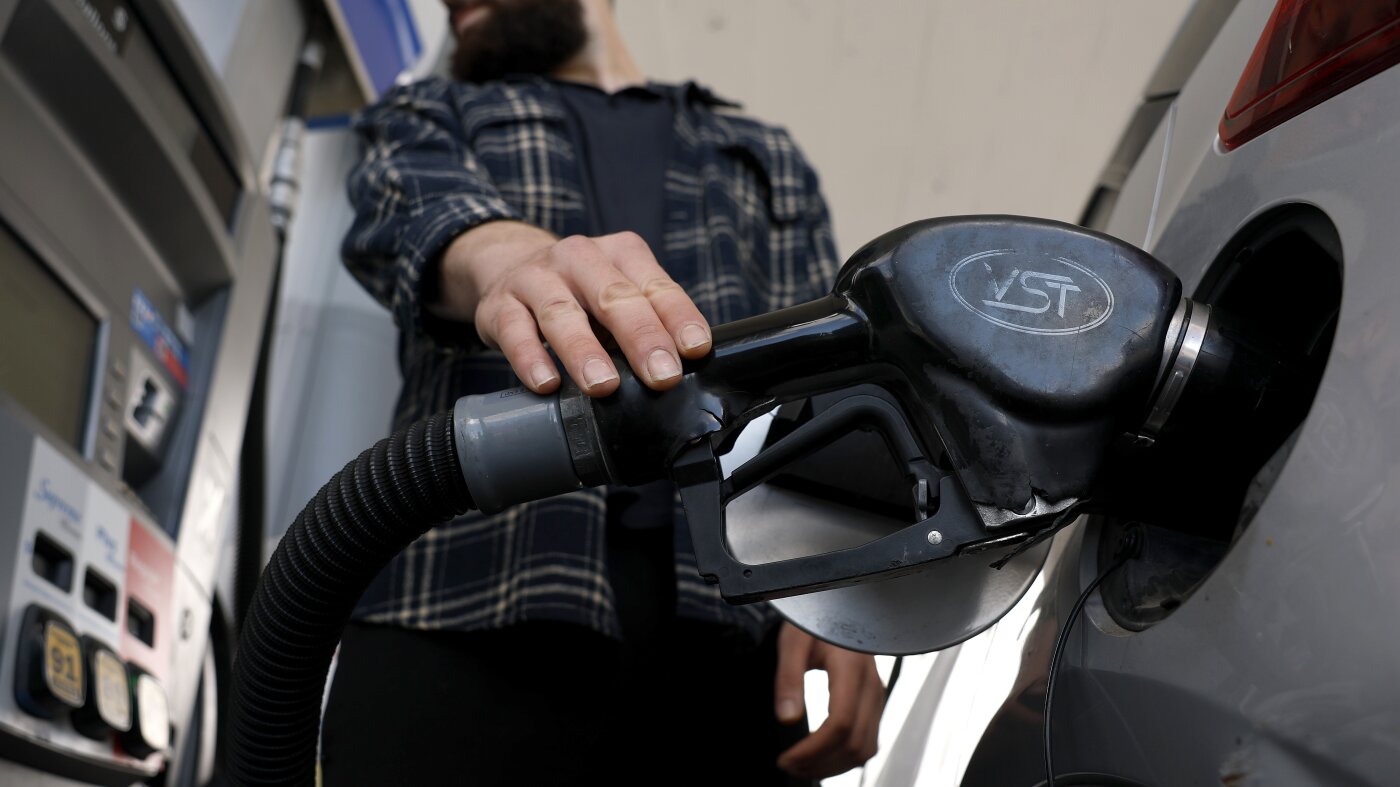
Fuel Saving Strategies - as market coverage focuses on financial performance, revenue trends, and earnings quality with daily market insights and expert commentary. The national average for a gallon of gasoline stands at $4.55 as the United States enters one of its busiest travel weekends of the year. To manage higher fuel costs, drivers are considering slower driving, switching to electric vehicles, or reducing trips altogether.
Live News
Fuel Saving Strategies - as market coverage focuses on financial performance, revenue trends, and earnings quality with daily market insights and expert commentary. Real-time updates allow for rapid adjustments in trading strategies. Investors can reallocate capital, hedge positions, or take profits quickly when unexpected market movements occur. The latest national average gasoline price of $4.55 per gallon has been reported as millions of Americans prepare for a peak travel weekend. According to the source, motorists are weighing several options to reduce fuel expenses, including driving at slower speeds, adopting electric vehicles (EVs), and minimizing or eliminating non-essential driving. Driving slower can improve fuel efficiency—the U.S. Department of Energy notes that each 5 mph decrease in highway speed may improve fuel economy by 7% to 14%. Switching to an electric vehicle would eliminate gasoline costs entirely, though upfront purchase prices and charging infrastructure remain considerations. For those unable to change vehicles, combining errands, carpooling, or using public transit could reduce total miles driven. The source does not provide specific savings estimates beyond these general strategies. The $4.55 figure represents a notable increase from recent norms, though it is not a record high. The timing coincides with the Memorial Day weekend or another holiday period, depending on the year, when gasoline demand typically peaks. Higher prices may be influencing travel plans, but the exact impact on aggregate demand remains unclear.
As Gas Prices Hit $4.55, Drivers Explore Fuel-Saving Strategies Ahead of Busy Travel Weekend Real-time data enables better timing for trades. Whether entering or exiting a position, having immediate information can reduce slippage and improve overall performance.Monitoring derivatives activity provides early indications of market sentiment. Options and futures positioning often reflect expectations that are not yet evident in spot markets, offering a leading indicator for informed traders.As Gas Prices Hit $4.55, Drivers Explore Fuel-Saving Strategies Ahead of Busy Travel Weekend Some traders combine sentiment analysis from social media with traditional metrics. While unconventional, this approach can highlight emerging trends before they appear in official data.Investors may use data visualization tools to better understand complex relationships. Charts and graphs often make trends easier to identify.
Key Highlights
Fuel Saving Strategies - as market coverage focuses on financial performance, revenue trends, and earnings quality with daily market insights and expert commentary. Scenario planning is a key component of professional investment strategies. By modeling potential market outcomes under varying economic conditions, investors can prepare contingency plans that safeguard capital and optimize risk-adjusted returns. This approach reduces exposure to unforeseen market shocks. Key takeaways from the latest data include the pressure on household budgets from elevated gasoline costs. For consumers, even small behavioral changes—such as reducing speed by 5–10 mph, ensuring proper tire inflation, and avoiding excessive idling—could cumulatively lower fuel bills. Electric vehicles present a longer-term option, but high upfront costs and limited charging access may slow widespread adoption. From a market perspective, sustained high gasoline prices could lead to reduced driving miles and lower demand for gasoline, potentially easing price pressures over time. Conversely, if demand remains robust during the travel weekend, prices could stay elevated. The energy sector may see mixed impacts: oil refiners could benefit from high margins, while retailers of gasoline might face volume declines as consumers cut back. No specific forecasts have been provided in the source, but historical patterns suggest that consumers often adjust behavior when prices cross psychological thresholds like $4.00 per gallon. The shift toward fuel-efficient vehicles, including hybrids and EVs, tends to accelerate in such environments.
As Gas Prices Hit $4.55, Drivers Explore Fuel-Saving Strategies Ahead of Busy Travel Weekend Cross-market observations reveal hidden opportunities and correlations. Awareness of global trends enhances portfolio resilience.While technical indicators are often used to generate trading signals, they are most effective when combined with contextual awareness. For instance, a breakout in a stock index may carry more weight if macroeconomic data supports the trend. Ignoring external factors can lead to misinterpretation of signals and unexpected outcomes.As Gas Prices Hit $4.55, Drivers Explore Fuel-Saving Strategies Ahead of Busy Travel Weekend Visualization tools simplify complex datasets. Dashboards highlight trends and anomalies that might otherwise be missed.Investors often experiment with different analytical methods before finding the approach that suits them best. What works for one trader may not work for another, highlighting the importance of personalization in strategy design.
Expert Insights
Fuel Saving Strategies - as market coverage focuses on financial performance, revenue trends, and earnings quality with daily market insights and expert commentary. Many traders use alerts to monitor key levels without constantly watching the screen. This allows them to maintain awareness while managing their time more efficiently. For investors, the current gasoline price environment may have implications across several sectors. Automakers with strong EV lineups—such as Tesla, General Motors, and Ford, among others—could see increased interest from consumers looking to avoid gasoline costs. However, the transition to electric mobility remains gradual, and traditional internal combustion engine vehicle sales may not decline sharply in the near term. The energy sector might experience mixed outcomes: upstream oil producers could benefit from sustained high prices, while downstream companies (e.g., refiners and fuel retailers) could face margin compression if demand falls. Renewable energy and battery storage stocks could also attract attention as alternatives to gasoline-dependent transportation. Broader economic impacts are worth monitoring. Higher gasoline prices act as a tax on consumers, potentially reducing discretionary spending in other areas. This could weigh on consumer-facing stocks and retail sectors that are not energy-related. However, the effect may be moderate if prices stabilize or decline after the holiday weekend. Disclaimer: This analysis is for informational purposes only and does not constitute investment advice.
As Gas Prices Hit $4.55, Drivers Explore Fuel-Saving Strategies Ahead of Busy Travel Weekend Investors who track global indices alongside local markets often identify trends earlier than those who focus on one region. Observing cross-market movements can provide insight into potential ripple effects in equities, commodities, and currency pairs.Scenario modeling helps assess the impact of market shocks. Investors can plan strategies for both favorable and adverse conditions.As Gas Prices Hit $4.55, Drivers Explore Fuel-Saving Strategies Ahead of Busy Travel Weekend Predictive analytics combined with historical benchmarks increases forecasting accuracy. Experts integrate current market behavior with long-term patterns to develop actionable strategies while accounting for evolving market structures.Investors may use data visualization tools to better understand complex relationships. Charts and graphs often make trends easier to identify.